

Innocence Lost
Military personnel weren’t the only people attacked on December 7, 1941
The loss of life among military personnel that day is well-documented. Of the 2,335 service members who perished during the attack, nearly half were aboard the USS Arizona, which was torn apart when a Japanese bomb detonated the ship’s forward ammunition magazine. Many others died on additional damaged naval vessels or during bombing and strafing runs at nearby airfields.
Less well-known, however, is that 68 civilians also lost their lives in the attack. While some were directly targeted by Japanese gunfire and bombs, most died as a result of friendly fire—shells fired by Coast Guard ships and shore-based anti-aircraft guns intended for the enemy instead landed in Honolulu and other areas on the island. Among the civilian casualties were eleven children, all aged 16 or younger.
Strategic Ford Island
Countless children throughout O’ahu witnessed the attack. Closest to the heart of the attack were the families living on Ford Island.
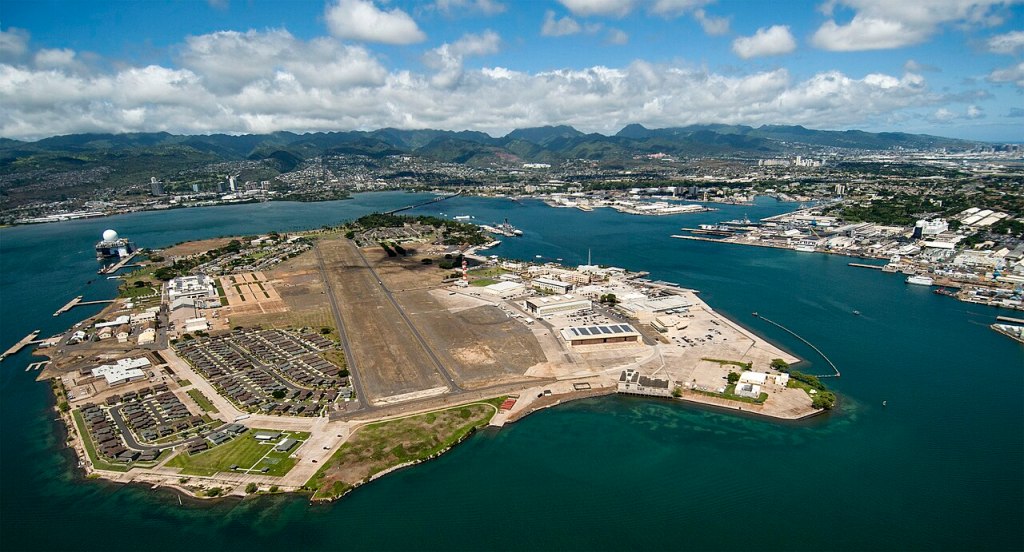
Originally called Mokuʻumeʻume (meaning “island of strife”) by the Hawaiian people, the island’s flat landscape and central position within Pearl Harbor made it an ideal location for aviation training and innovation. In 1916, the U.S. Navy acquired the island from the estate of Dr. Seth Porter Ford, for whom the island was subsequently named. This purchase marked the start of its evolution into a naval aviation base.
By the early 1920s, Ford Island had become an essential part of the U.S. Pacific Fleet’s operations, serving as a significant site for seaplane activity, airfield expansion, and battleship mooring. Over the next decade, Ford Island saw the development of housing to accommodate the growing number of military personnel stationed there. Quarters were built for officers and enlisted men, including Chief Petty Officer (CPO) quarters, reflecting the island’s increasing strategic importance.
Interestingly, one of these homes was built over an unused gun battery, which had been sealed up and converted to the basement of the base admiral’s quarters (Quarters K) in 1936. It was used as an air-raid shelter during the Japanese attack. Before that day, the children had often played inside the dimly lit, concrete-lined bunker they called “the dungeon.”
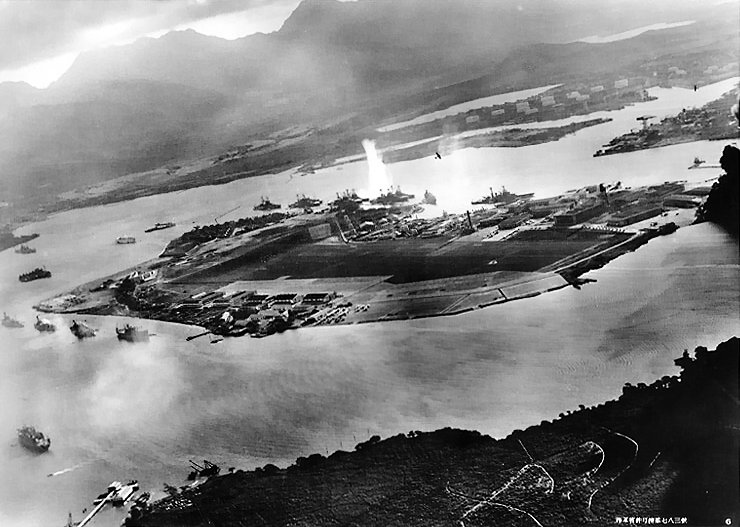
But Ford Island was more than a housing and training area. It was a target. The eight battleships moored along Battleship Row were the Japanese attackers’ primary objective when they flew toward Pearl Harbor on the morning of December 7, 1941.
One Child’s Memory
Several interviews with survivors of the attack on Pearl Harbor have been published over the years. However, the most poignant memories are of children living on O’ahu in December 1941. Countless children throughout O’ahu witnessed the attack, perhaps none more closely than 8-year-old Charlotte Coe.
Charlotte and her family lived in the development known as Nob Hill on the northern end of Ford Island. Her father, Charles Coe, was third-in-command at that station, and their house overlooked Battleship Row.
In a 2012 interview, Charlotte recalled that as an 8-year-old, she and her friends often ran out to the nearby dock to meet officers disembarking from the ships. Before the attack on Pearl Harbor, she remembered a carefree childhood on Ford Island, where she and the other children felt “free as birds.” Each day, they took a boat to school on the O’ahu mainland, and at home, the lush tropical shores of Pearl Harbor were their playground.
The first explosion at 7:48 that fateful morning in December jolted Charlotte from a deep sleep. “Get up!” she recalled her father yelling. “The war’s started.” Her family, along with other men, women, and children from nearby homes, rushed to take cover in the old gun battery. As they ran, a low-flying plane marked with red circles on its wings roared overhead, so close that Charlotte could see the pilot’s face.
The “Pearl Harbor Child”
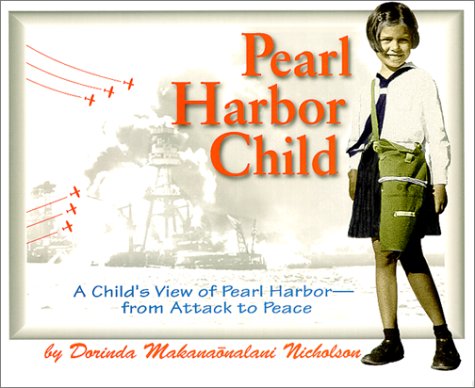
Dorinda Makanaonalani Nicholson was born in Hawaii to a Hawaiian mother and a Caucasian father. At the time of the attack, they were civilians living in Pearl Harbor. Dorinda’s family lived near the tip of the Pearl City Peninsula, only a few hundred yards from the USS Utah, the first ship to be attacked on 12/7/41.
As an adult, Dorinda has published numerous travel articles and authored a series of educational films for children about Hawai’i’s history, culture, and land. Pearl Harbor Child was her first book and tells Dorinda’s story, as well as those of other eyewitnesses.
According to her account of the day, Dorinda’s mother was in the kitchen making breakfast when the attack began. Upon hearing the explosions, her father bolted from the kitchen table and raced into the front yard. Dorinda was right behind him, and, as they looked up, they could see the red circles painted on the wings of Japanese torpedo planes.
She recalled, “One plane flew just barely above our treetops and tipped his wings. Since his overhead canopy was pushed back and open, I saw the pilot’s face with round goggles anchored to his forehead.
The fighter plane slid quickly into its final descent and headed for unsuspecting American ships filled with sleeping sailors, just a few hundred yards from our house.”
Dorinda and her family ended up hiding in nearby sugar cane fields. Martial law was implemented, so they couldn’t return home and had to spend the night in the community center.
So Many Stories
These are just two of the stories from the then-children of O’ahu. There are many more to explore, as well as memories of children around the country who vividly remember where they were on that “Day of Infamy.” Many photographs of schoolchildren taken in the months after the attack show them carrying gas masks and practicing how to put them on in case an air raid siren sounded.
The children put their gas masks around the backs of their chairs while in class. When playing outside, they kept them in a set spot so they could grab them right away.
“It was like an extra arm we had to have all the time,” one child recalled.
Memorials to the Fallen
A visit to Pearl Harbor, with its museum and historical displays, is an essential part of your trip to O’ahu. The World War II Valor in the Pacific monument notes the loss of civilian life, pointing out that those who were killed ranged from shipyard workers to children. The youngest victim of the attack was just 3 months old.
As part of the World War II Valor in the Pacific Monument, the USS Arizona Memorial and Visitor Center, the USS Utah Memorial, and the USS Oklahoma Memorial should absolutely be on your list to see!

