

Remembering the Military Medical Heroes of Pearl Harbor
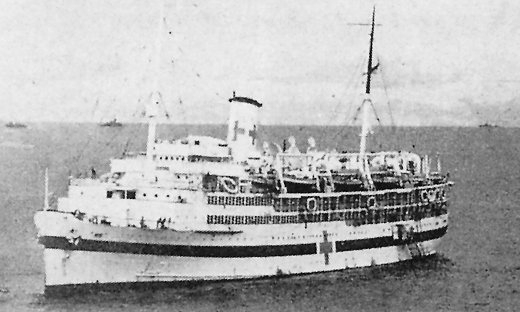
Constructed at the shipbuilding drydock in Newport News, Virginia, in 1926 and commissioned in August of 1941, the USS Solace was present at Pearl Harbor during the Japanese attack on December 7, 1941. As an unarmed hospital ship, she was unable to take part in the defense against the incoming aircraft. Onboard, Eric Haakenson, a crew member aboard Solace, captured the exact moment of the USS Arizona’s explosion on film. The ship immediately deployed motor launches with stretcher teams to aid the burning and heavily damaged Arizona, rescuing the wounded and pulling sailors from water engulfed in flaming oil. After several trips to assist Arizona and West Virginia, the boat crews turned to help those on the Oklahoma. In accordance with the Geneva Convention, the attacking Japanese aircraft did not target Solace, clearly marked with white paint and red crosses. She was among the few vessels to emerge from the assault without damage.
The Pearl Harbor Attack and Its Aftermath
The surprise attack on Pearl Harbor began at 7:55 a.m. local time and lasted for one hour and 15 minutes. According to the National World War II Museum, the assault claimed the lives of 2,403 U.S. personnel, including 68 civilians, and wounded another 1,178. The U.S. military also suffered the loss of 169 aircraft destroyed and 159 damaged, while 16 ships sustained damage and three were destroyed.
Tragically, nearly half of the fatalities were from the USS Arizona, the battleship that exploded and sank with most of its crew still aboard.
Medical teams responded swiftly and worked tirelessly around the clock to treat a wide range of injuries—second- and third-degree burns, shock, shrapnel, and machine-gun wounds among them.
For the Navy medical corps, Pearl Harbor offered the first large-scale medical emergency in decades, according to André Sobocinski, a historian and publications manager for the Navy Bureau of Medicine and Surgery.
It Took Multiple Medical Locations to Care For the Wounded
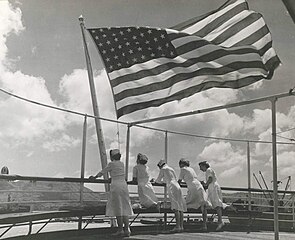
Their efforts took place over numerous locations: battle dressing stations and sick bays aboard warships, the hospital ship Solace, first-aid stations, dispensaries at the two naval air stations, the Marine Corps Air Station at Ewa, Fleet Marine Force Defense Battalions, the Navy Yard, the Section Base at Bishop’s Point, a makeshift field hospital in the Officers’ Club at the Navy Yard, the Mobile Base Hospital, and the U.S. Naval Hospital at Pearl Harbor, according to the Naval History and Heritage Command.
As the Army Medical Department recounts, “Nurses, physicians, and medical corpsmen triaged, stabilized, and transported those likely to survive, while staging the dead behind the building.”
“The emergency room at Tripler Hospital was quickly flooded with patients from the battlefield, but the staff was able to sort patients appropriately to the wards, to the operating room, or provide comfort care as they died,” according to the Army Medical Department’s account.
And “at Schofield Barracks Hospital, collaboration between tireless doctors, nurses, and corpsmen was key to providing life-saving surgery and care.”
Bravery, Determination, Resourcefulness
“From their first realization of an enemy attack, the doctors, dentists, nurses, and corpsmen were unexcelled in personal bravery, in determination, in resourcefulness, and in their capacity to put into practice previously formulated plans,” the Naval History and Heritage Command wrote in its account of the attack.
“There was an overwhelming need to go into immediate action, retrieve the casualties, and provide medical services – to do what we were trained to do,” said Sobocinski.
“They did this not knowing if a third attack was imminent.”
The Nurses Provided More Than Medical Care
Army nurse Myrtle M. Watson was the only nurse in the orthopedic ward at Schofield Hospital during the attack. As the bombing started, “she helped protect patients by piling mattresses around them for cover,” according to an account from the Department of Veterans Affairs. “For three days, Watson continued working around the clock, with only a skeleton crew to assist her and only a dim flashlight at night.”
Navy Nurse Corps Lt. Grace Lally, known as “Tugboat Annie” for her years of duty at sea, was the chief nurse aboard the Solace during the attack. Lally and her staff helped set up emergency wards for the wounded, the majority of whom were burn victims.
According to the Pearl Harbor Museum’s account, the crew treated nearly 300 wounded servicemen. (Be sure to watch the Department of Defense video that tells more stories about the female military nurses of Pearl Harbor.)
As a hospital ship, the Solace did not come under fire and was one of the few ships to remain undamaged. But seeing its sister ships under attack, “hospital corpsmen boarded small boats and steamed into the wreckage of the USS Arizona,” Sobocinski said, braving “an inferno as they retrieved several wounded sailors.”
The Solace received 132 patients – over 70% were burn victims – and Mobile Hospital # 2 received 110 casualties, Sobocinski said.
Following the Attack
In the days following the attack, many of those same corpsmen had the “grim task” of searching for the remains of service personnel in the harbor.
“At the naval hospital, a team of a Navy pharmacist-warrant officer, a dentist, and a pathologist was tasked with identifying a seemingly unending flow of bodies, most without identification tags and many unable to be identified through fingerprints,” said Sobocinski. “They prepared the bodies for the first burials of victims that took place on December 8.”
Recognizing the Heroes
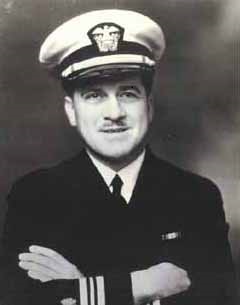
Lt. Cmdr. Hugh R. Alexander
Serving as the senior dentist aboard the USS Oklahoma during the Pearl Harbor attack, Navy Lt. Cmdr. Hugh R. Alexander displayed remarkable bravery. He was posthumously awarded the Silver Star Medal for his courageous efforts in saving fellow shipmates on December 7, 1941. His citation notes that he “gallantly laid down his life in order that his shipmates might live.” In April 2018, his memorabilia were displayed at the base chapel of Naval Air Station North Island, California, during the award ceremony.
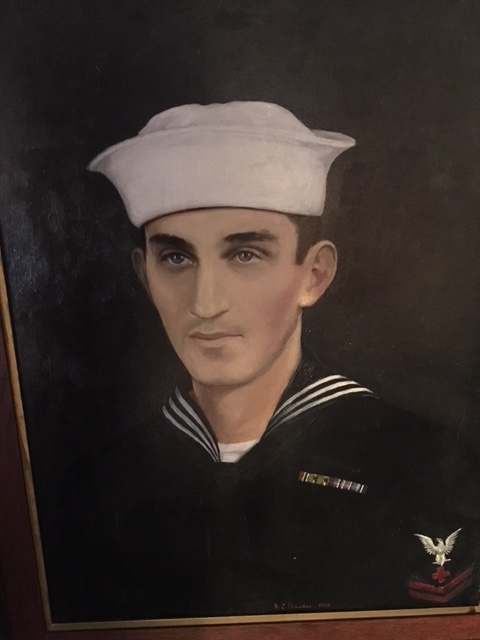
Pharmacist Mate Second Class Ned Curtis
On the USS Nevada, Navy Pharmacist Mate Second Class Ned Curtis was recognized with the Navy Cross for his heroic actions during the attack. He braved enemy bombing and strafing to attend to a wounded officer, transporting him to safety despite suffering severe burns himself, which required extended hospitalization.
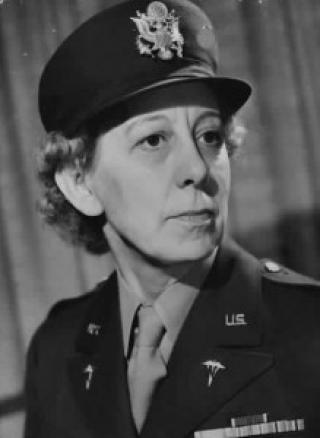
First Lt. Annie G. Fox
First Lt. Annie G. Fox, head nurse at Hickam Field Hospital near Pearl Harbor, led her team in caring for the wounded during the attack. She assisted in surgical procedures and managed overwhelming numbers of casualties with composure and efficiency. For her exemplary service, she became the first woman to receive the Purple Heart in 1942. However, as the award criteria evolved to recognize only those wounded in action, her commendation was later replaced by a Bronze Star in 1944.
The USS Solace earned seven battle stars for World War II service
 Helster777