


The waters around the Hawaiian island of Maui are teeming with life. Snorkeling in this fantastic underwater world, you can see beautiful tropical fish, sea turtles, whales, and dolphins in their natural environment. Up to 30% of the reef fish found in Hawaiian waters are endemic because of the isolation and climate of the islands. But the marine life doesn’t stop there; corals, anemones, urchins, and nudibranchs (sea slugs) also call Maui home.
What are the most common reef fish in Maui?
The Yellowtail Wrass (Lolo) can be a whopping 14 inches long and has the strength to push rocks and coral over to find food beneath. With two prominent teeth in the front of the upper and lower jaw, the Lolo eats snails, hermit crabs, shrimps, mollusks, and sea urchins. Yellowtail Wrasse bury themselves in the sand at night. On Maui, they are commonly found on the island’s west side at Coral Gardens.

The Hogfish (‘A’awa) is also part of the Wrasse family. The Hogfish uses its long snout to search for crustaceans on the sandy ocean floor. It’s called a Hogfish because it looks like a hog rooting for food in the mud. Hogfish can change genders to adapt to favorable breeding conditions.
The Bird Wrasse (Hinalea i iwi) is one of the easiest fish to identify in Hawaiian waters with its long, beak-like snout. This fish uses its snout to capture prey and break it into bite-sized pieces. The females are brownish black, while the males are variations of green. These fish are approximately 12 inches in length and have the ability to change sex to adapt to their breeding environment. Single males will often mate with a group of females (like a harem), and females may become males to build a harem of their own.
What is the Hawai’i state fish?

The official state fish of Hawai’i is the Humuhumunukunukuapua’a. In Hawaiian, the name means “triggerfish with a snout like a pig.” The humuhumu is one of a wide variety of triggerfishes and is endemic to the coasts of the Central and South Pacific. These little guys are often seen spitting sand from their mouths as they sift through the bottom materials in search of food. Triggerfish are extremely fast, so have your camera ready when you snorkel in Maui! Now, you need to go practice saying it at least five times: Humuhumunukunukuapua’a (who-moo-who-moo-noo-koo-noo-koo-ah-poo-ah-ah).
See two of the fish from Finding Nemo while snorkeling in Maui.
The brightly colored Yellow Tang (lau’ipala) is perhaps the most easily recognized of all Hawaiian reef fishes. Bubbles from Finding Nemo was a Yellow Tang. Adult fish are about 7 to 8 inches in length and roughly .5 to .75 inches in thickness. All individuals of this species are bright, daffodil-yellow.
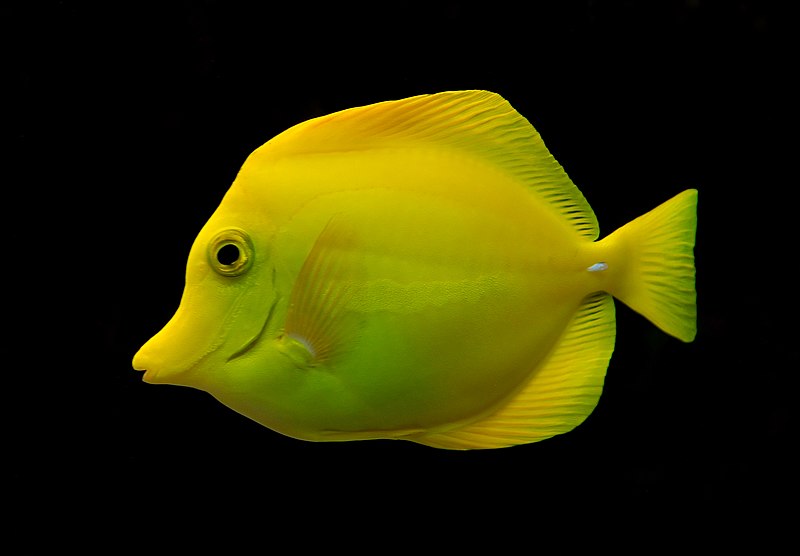
The positions of their dorsal and ventral fins give them an arrow-like shape. A long, snout-like mouth is used (as with other tangs) to eat the algae off rocks. They also have a sharp spine located near their tail. They are one of Hawai’i’s most popular export fish for the aquarium industry.
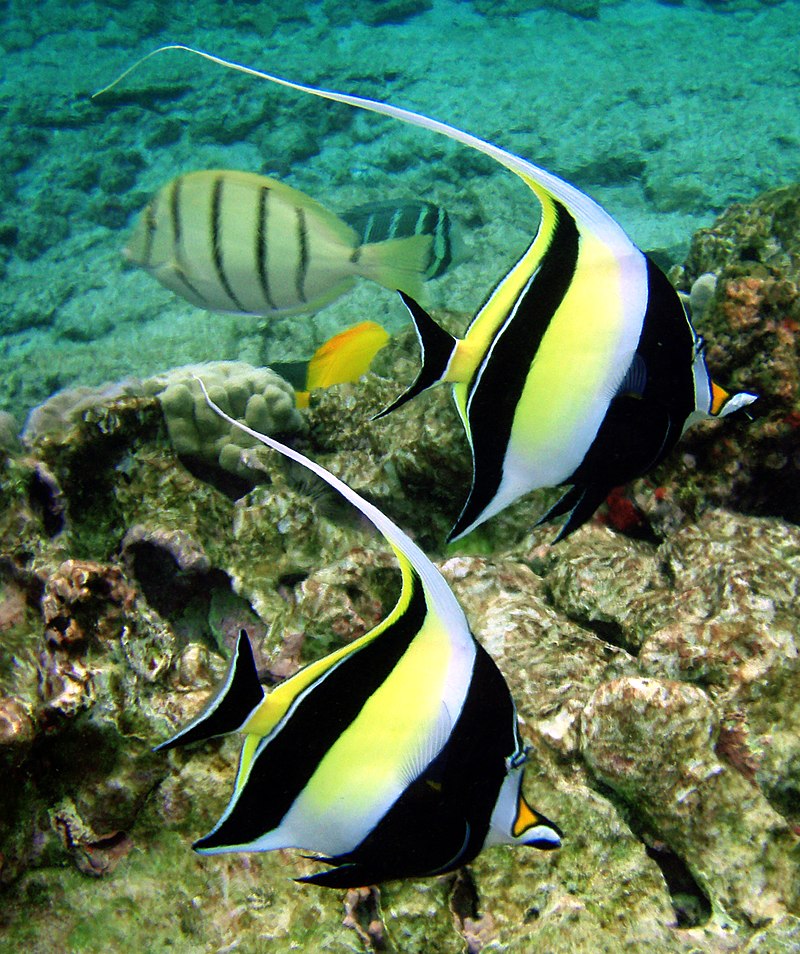
When Nemo is given a new home in a dentist’s aquarium, he is taken under the fin of the gruff but kind fish named Gill. Gill was a Moorish Idol fish (Kihi kihi). The Moorish Idol has a crescent-shaped body with an extended dorsal fin. Its distinctive black and white markings make the Moorish Idol a popular choice for aquariums. Moorish Idols can grow up to 10 inches in length.
Nemo himself was a clownfish. Sadly, the clownfish do not inhabit Hawaiian waters, but a close relative, the White-Spotted Damselfish (Alo’ilo’i), does. The White-Spotted Damsel is popular in aquariums due to its distinctive single white spot on both sides of its body. You will often find schools of young Damsels in Hawai’i at the tops of coral heads. Hawai’i is home to 17 of the 325 known species of damselfish.
Butterflyfish in Maui waters.
Like the Wrasse and Damselfish, several species of Butterflyfish can be found in the waters of Maui. The Ornate Butterfly (Kikakapu) is often considered one of the most attractive fish in Hawaiian waters. With a blue and yellow rounded body with a distinctive black “eyespot” on the dorsal fin, you will know it when you see it hiding among the coral. You can recognize the Ornate Butterfly by the six orange diagonal stripes on either side of its body. Its cousin, the Threadfin Butterfly (Lau hau), is one of the most commonly recognizable butterflyfish, especially for saltwater tank enthusiasts.
The Bluestripe Butterfly Fish is a rare species in the Hawaiian Islands. Bluestripes have been found living at depths of up to 600 feet! The Bluestripe Butterflyfish is one of the most recognizable reef fish because of their eight diagonal bright blue stripes that run diagonally across their body.
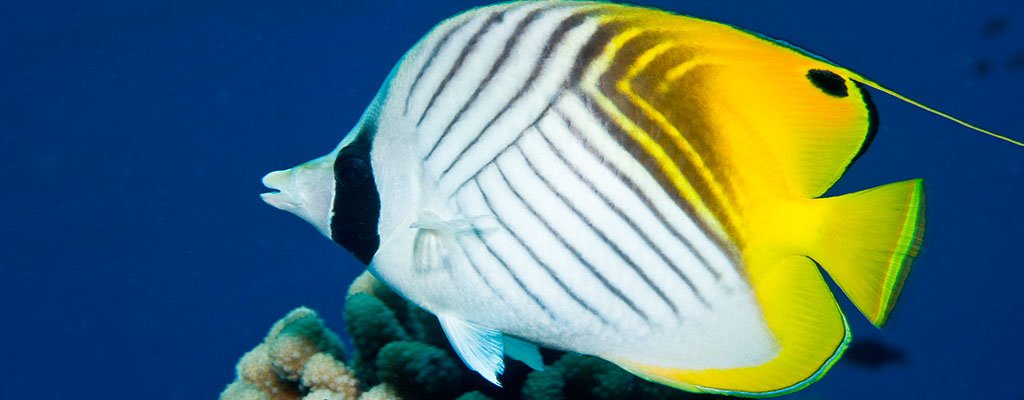
The Rainbow Butterfly (Lau hau) may be the most colorful fish of the butterfly family. A favorite of snorkelers in Hawai’i, this incredibly beautiful fish can be found at depths shallower than 65 feet. The front half of the Rainbow Butterfly is orange and yellow, but fades to a blueish purple on its back and at its dorsal fin. A striped pattern runs horizontally along its body. Even though every rainbow color is not represented in the Rainbow Butterfly Fish, it’s the closest you’ll find in Hawai’i’s sea life.
Speaking of butterflies, how about Flying Fish?
If you’re lucky, you may get to see Flying Fish (Malolo). This amazing species of fish can glide in the air for distances of up to 1300 ft for periods of up to 40 seconds. Locals and visitors throughout Hawai’i marvel at the flying fish’s ability to leap out of the water and glide using wing-like fins to catch the air. This behavior helps avoid underwater predators, such as Mahi Mahi, dolphins, Ahi (tuna), and Billfish. If you’re out on a snorkel tour or sunset sail in Maui, your chances of seeing a flying fish are pretty high.
Did you say shark?
White tip reef sharks (Mano lalakea) are often observed resting in caves or under ledges. They are the only sharks in Hawaiian waters capable of stopping to swim and sleep for long periods, so divers commonly observe them. These sharks are gray with distinct white tips on the tops of the first and second dorsal and tail fins.
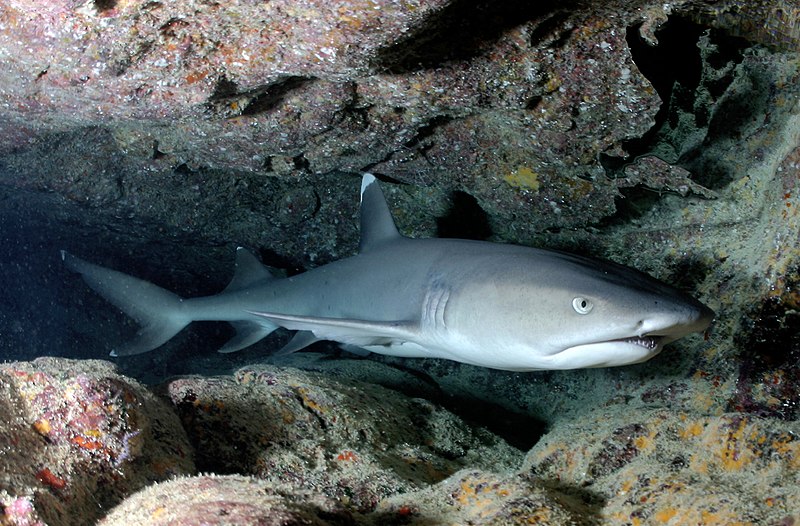
Sharks play a crucial role in maintaining marine ecosystems by removing sick, injured, and diseased animals from the environment. Therefore, they are vital to maintaining a clean and healthy ocean.
In old Hawai’i, sharks were worshipped and protected as an ‘aumakua, or family deity. Those with the shark as their ‘aumakua believed their departed ancestors took the form of a shark. They would feed and protect the shark, and the shark would preserve the family. Shark stories are a staple of Hawaiian literature, making for fascinating reading.
Everyone should see a Hawaiian Sea Turtle
Native to Hawai’i, the green sea turtle (honu) is the largest hard-shelled sea turtle in the world and one of Earth’s most ancient animals. In adulthood, they can reach lengths of up to four feet and weigh over 300 pounds. In old Hawai’i, green sea turtles were thought to be the property of the ali‘i, or chiefs.
So, where to see sea turtles in Hawai’i? On Maui, sea turtles are a favorite discovery of snorkelers and divers on the island’s South and West coastlines. A snorkel trip to Molokini Crater or Turtle Town will take you to some of the best spots to see these fantastic animals serenely cruising along the reef, snacking on algae. Be sure to keep your distance from any turtles you encounter, as they are protected by federal law.

All sea turtles are listed as endangered species in the United States. It is a federal offense to harm, harass, or even touch a sea turtle. Whether the turtle is in the water or resting on a beach, any physical contact is prohibited.
Magnificent Humpback Whales (koholā)
The migration of whales to and around the Hawaiian Islands is an annual winter phenomenon that has been familiar to Native Hawaiians for centuries. It is estimated that over 50% of the North Pacific humpback whale population comes to Hawai’i in the winter!
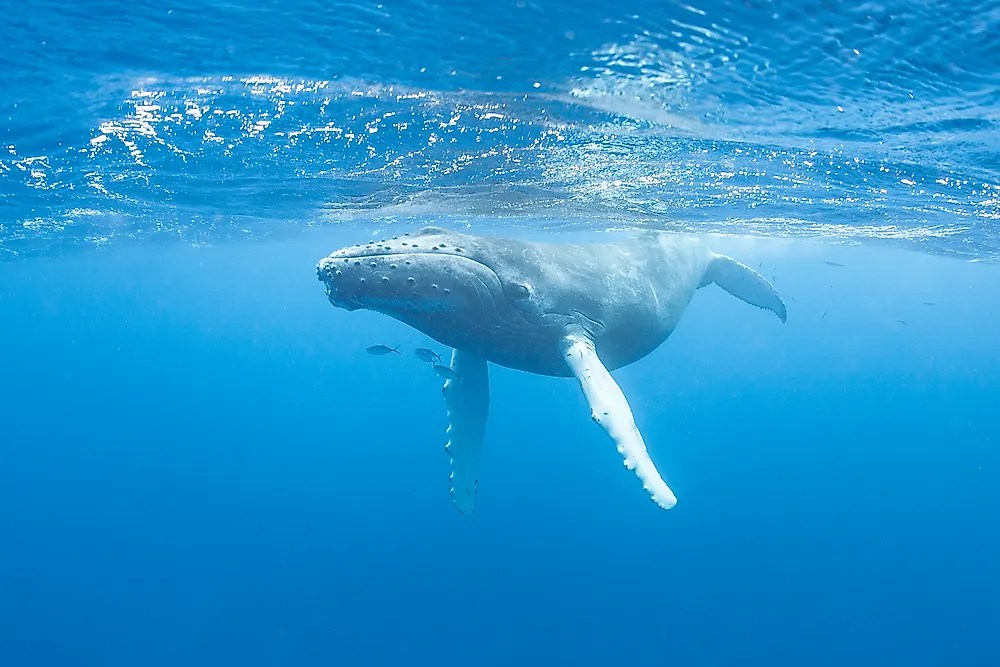
Book a whale-watching trip during these months, and you’re almost guaranteed to see these giants breaching and slapping the water.
Hawai’i Spinner Dolphins
Hawaiian spinner dolphins are unique to the waters of Hawai’i. Called Naiʻa in Hawaiian, these friendly and beautiful animals flock to the shores of Maui to enjoy the warm, clear, tropical water and shallow bays. Whale-watching tours are popular attractions during winter, but you can satisfy your need to watch marine mammals play almost any time of year when you book a morning snorkel trip.
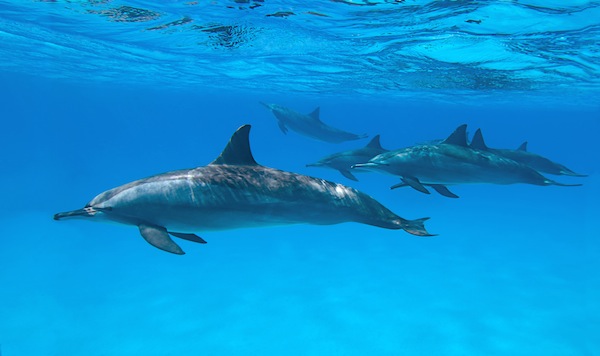
Dolphins spend their daylight hours in the bays of our sunny shores. As dawn turns to morning, schools of dolphins often gather to reacquaint and play, so you can usually spot them as you cruise out to Molokini islet. As a spinner dolphin jumps out of the water, it will spin and rotate up to seven times in the air!
Can you swim with the dolphins in Maui? As exciting as that sounds, they are a protected species, and no one is allowed to swim with dolphins around the island.

Sea Urchins of Hawai’i
The Rock Boring Urchin (Ina) is the most common urchin found throughout Maui. They come in two colors, olive green and mauve. They aren’t venomous, but their spines are sharp enough at the tips that they would be painful to step on.
The Shingle Urchin (hāʻukeʻuke) doesn’t have sharp spikes. Instead, they’re shaped like little paddles and lie flat like protective scales.
Are corals rocks, plants, or animals?
Corals (Ko’a) are small marine animals. It is believed that coral is an Akua, or deity, that may be responsible for both the life and death of natives to the islands. The “hard” type of coral grows with the help of algae, which provide it with color and nutrients that aid in forming a sturdy, stony skeleton.
Go snorkeling in Molokini Crater and see the colorful inhabitants of Maui’s coral reefs up close. Look for the various corals that comprise this diverse ecosystem. What you might have thought of as just rocks will surprise you with their delicate beauty.
*Note that you’ll want to book your trip with a local company that has permission to bring visitors into Molokini. To protect the delicate ecosystem, private boats are not allowed.

Coral conservation
Hawai’i is a crucial site for global coral reef conservation. Its islands are home to one of the highest concentrations of endemic marine species anywhere on Earth, as well as 85% of the United States’ coral reefs. One thing you can do to help is to use Hawai’i reef-safe sunscreen. Two ingredients in many popular sunscreen products — oxybenzone and octinoxate — are known to harm and kill corals. When you apply sunscreen containing these chemicals, then swim or snorkel, the sunscreen washes off and contaminates the reef ecosystem. Hawai’i law now bans the sale of sunscreens with these toxic chemicals.
Come and see for yourself!
Beautiful Hawai’i and all of its residents (wet and dry) await you! Don’t forget your camera and your sense of adventure.
 Helster777