

The King stepped up to honor the fallen at Pearl Harbor

Elvis Presley loved Hawai’i
From his first visit in November 1957 to his final vacation in March 1977, Elvis Presley made numerous trips to the Hawaiian Islands. In addition to filming three movies there—Blue Hawaii, Girls! Girls! Girls!, and Paradise, Hawaiian Style—he also performed live, most notably in the globally televised Elvis: Aloha from Hawaii concert on January 14, 1973.

Elvis was deeply affected by the islands’ natural beauty and the warmth of the Hawaiian people. With its sun-soaked beaches, world-class surfing, and breathtaking landscapes, Hawai’i embodied paradise for him. It became his favorite getaway, where he enjoyed many relaxing and memorable vacations.
His early concerts in Hawai’i got him hooked on the Islands. On November 10, 1957, he performed two shows at Honolulu Stadium and, on November 11, Elvis performed at the US Army’s Schofield Barracks. This was Elvis’s last performance before he entered the army.
Building the USS Arizona Memorial
The USS Arizona Memorial at Pearl Harbor marks the resting place of 1,102 of the 1,177 sailors and Marines killed during the attack on Pearl Harbor on December 7, 1941, and commemorates the events of that day. The unprovoked violence at Pearl Harbor was the cause for the United States’ involvement in World War II.
Accessible only by boat, the Memorial straddles the sunken hull of the battleship. Historical information about the attack, shuttle boats to and from the memorial, and general visitor services are available at the USS Arizona Memorial Visitor Center, located nearby. The battleship’s sunken remains were declared a National Historic Landmark on May 5, 1989.
The Memorial, built in 1962, is visited by more than two million people annually and is one of several sites in Hawai’i that comprise the Pearl Harbor National Memorial.
Conception and Funding for the Memorial
During and after World War II, the damaged superstructure of the USS Arizona was removed, and plans were initiated to build a memorial over the ship’s sunken remains.
In 1942, Robert Ripley, the famed creator of Ripley’s Believe It or Not! visited Pearl Harbor. Six years later, in 1948, he returned to the site to broadcast a radio show. Following the broadcast, Ripley reached out to the U.S. Navy, writing to Rear Admiral J.J. Manning of the Bureau of Yards and Docks to express his desire for a permanent memorial.
Although Ripley’s original proposal was dismissed due to high costs, the concept of a memorial gained traction. In 1949, the Pacific War Memorial Commission was established to oversee the creation of a lasting tribute in Hawai‘i. The following year, Admiral Arthur W. Radford, commander of the Pacific Fleet, mounted a flagpole on the Arizona’s main mast and began the tradition of raising and lowering the American flag there. That same year, a temporary memorial was constructed above a portion of the remaining deckhouse.
Despite Radford’s repeated requests for funding to establish a national memorial, those efforts were blocked due to financial constraints during the Korean War. Finally, in 1958, President Dwight D. Eisenhower approved the creation of a National Memorial at Pearl Harbor; however, legislation required the memorial, budgeted at $500,000, to be privately financed. Ultimately, $200,000 of the cost was government subsidized, still leaving a significant shortfall.
Others stepped in, including Elvis, who performed a benefit concert at the Bloch Arena in Pearl Harbor on March 25, 1961. Ticket prices for Elvis’ performance ranged from $3 to $10 a seat, with 100 ringside seats reserved for people who donated $100. Elvis and Colonel Parker bought 50 of these special seats and donated them to patients from Tripler Army Hospital in Hawai’i.
Although Elvis hadn’t seen combat during his time in the Army, Colonel Parker reminded people at a press conference that 26-year-old Elvis was, “about the average age of those boys entombed in the Arizona.”
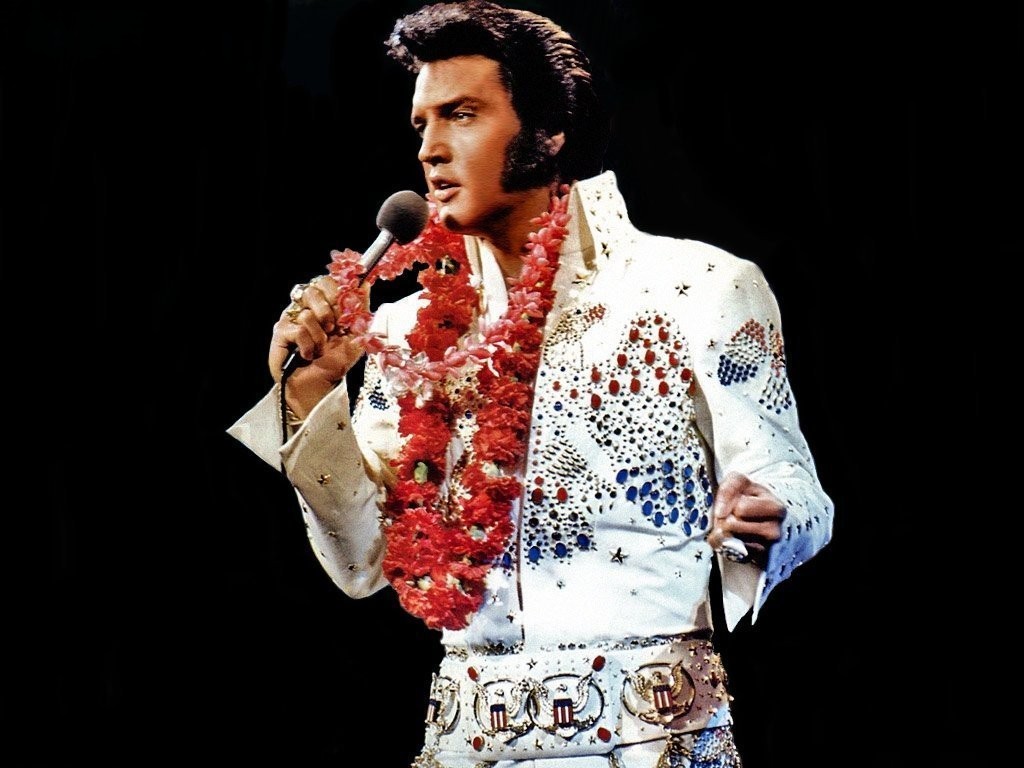
Ultimately, the benefit concert raised $64,000 for the Memorial. It was his final live performance until 1968.
Thousands greeted Elvis at the airport in Hawai’i
To promote the benefit concert, Colonel Tom Parker chose to air selections from Elvis Presley’s gospel album on Oʻahu radio stations. However, the concert needed little publicity. Excitement was already high, and the public eagerly rushed to purchase tickets. Even high-ranking officials had to pay for admission, as Parker insisted that no complimentary tickets be given out.
Elvis was scheduled to begin filming Blue Hawaii following the concert, so Paramount Studios arranged for him and his entourage to fly to the islands. When they arrived at Honolulu International Airport on the day of the event, Elvis was met by a cheering crowd of approximately 3,000 fans. Interestingly, legendary actor Jimmy Stewart, who was on the same flight, drew far less attention from the crowd.
Grand Ole Opry star Minnie Pearl, who arrived on the same flight as Elvis to co-star in the benefit concert, later recalled the overwhelming scene: “There’s no way to describe the pandemonium. I had never seen so many women in one place. They were screaming, they were yelling, I was horrified. I thought, ‘They’re going to kill him.’ And honestly, if they’d been able to break through, I believe they might have.”Even more important than the amount that was immediately raised by the concert, Elvis’ actions renewed attention to the USS Arizona Memorial Fund. Following the benefit, additional funds were received from both the public sector and private sources, and the memorial soon began construction. It was dedicated on May 30, 1962.
The world went into mourning just a few months later on August 16, 1977, when the King of Rock ’n’ Roll died at the age of 42.
When Elvis died, the 14th Naval District in Pearl Harbor sent a telegram to Presley’s father, Vernon: “Elvis Presley was greatly admired by the Navy men and women, past and present, of the 50th State,” the telegram read. “Your great loss is deeply shared by all of us who remember Elvis Presley as an outstanding American who loved his country and felt a kindred spirit with American men and women in uniform.”
 Helster777